
Demo modeEverything here is sample data. Nothing you do reaches a real business, and no email is sent.
Greendex
Learn

From plant to product

A plain-language guide to the wholesale cannabis products traded between licensed businesses. What each one is, how it gets made, and what buyers look at before they buy.

The supply chain at a glance

  1. 1Cultivation
  2. 2Harvest
  3. 3Dry and cure
  4. 4Trim and grade
  5. 5Processing and extraction
  6. 6Manufacturing
  7. 7Lab testing
  8. 8Packaging and distribution
  9. 9Retail

Not every product passes through every step, and the order can shift. Some flower is trimmed before it is dried, and products are often tested at more than one point along the way.

Greendex sits in the middle of this chain: B2B wholesale between licensed operators, brokered by UGC.

Flower

Indoor, greenhouse and outdoor

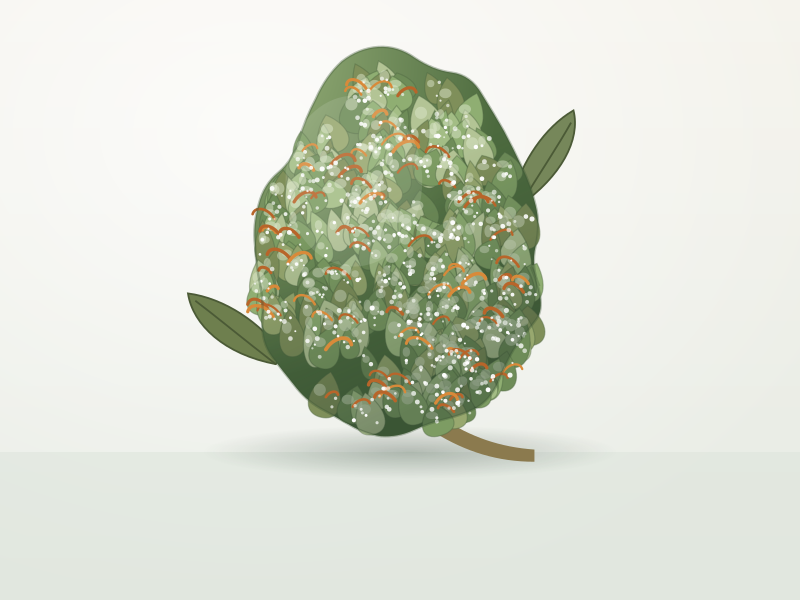
Illustration of a dried cannabis flower bud

What it is

Flower is the dried and cured bud of the female cannabis plant. It is sold to retailers as is, and it is also the starting material for pre-rolls and many concentrates.

It is grown in one of three ways, and the grow method is one of the first things on any listing. Indoor is grown in closed rooms under artificial light, with temperature and humidity controlled. Greenhouse uses sunlight under glass or plastic, often with extra lighting or blackout covers (light deprivation) to control the season. Outdoor is grown in open fields under the sun and is usually harvested once a year. Production costs generally run highest indoors and lowest outdoors.

After harvest it is sorted into grades. Bigs are the larger buds, usually from the top of the plant. Smalls are smaller buds from lower on the plant, often the same cultivar and batch at a lower price. Trim is the leaf cut away from the buds, and shake is the loose bits of bud and leaf that fall off in handling. Trim usually goes to extraction, and shake to pre-rolls or extraction. Grade names and size cutoffs vary from seller to seller.

How it gets there

  1. Grown
  2. Harvested
  3. Dried, usually for about one to two weeks
  4. Trimmed by hand or machine (some growers trim before drying)
  5. Cured in sealed containers
  6. Graded and packed

What buyers look at

  • Grow method (indoor, greenhouse or outdoor) and the grade
  • Potency and terpene results on the COA
  • Look, smell, moisture and how fresh the harvest is
  • Price per pound and how many pounds are available

Pre-rolls

Standard and infused

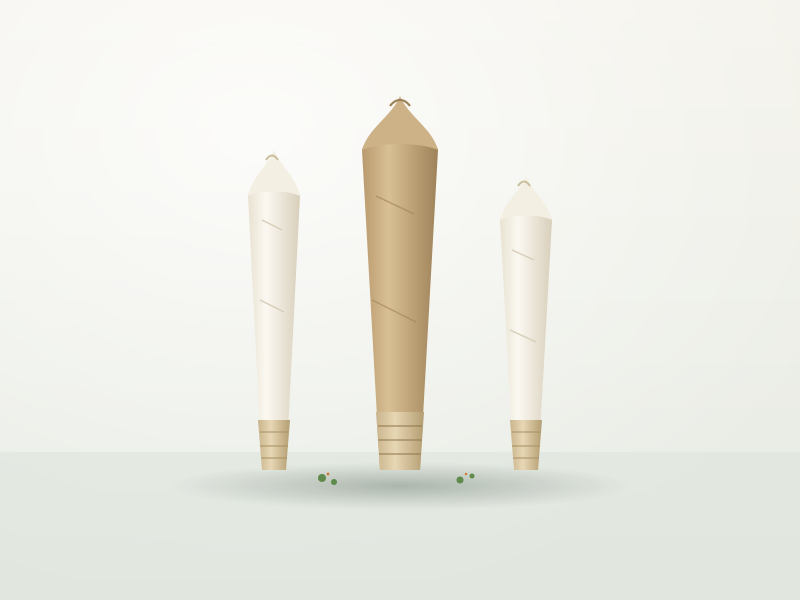
Illustration of three pre-rolled cones standing side by side

What it is

A pre-roll is ground cannabis packed into a paper cone or rolled in a paper or wrap, ready for retail.

Standard pre-rolls hold ground cannabis only, which can be whole flower, smalls, shake or trim. Infused pre-rolls add a concentrate, such as distillate, live resin, rosin, hash or THCa crystals, mixed into the flower or applied to the outside, and many are also rolled in kief.

They are sold by the unit or by the pack, in common sizes like 0.5 g and 1 g.

How it gets there

  1. Flower, smalls, shake or trim ground
  2. Concentrate added, for infused pre-rolls
  3. Cones filled and closed, by hand or machine
  4. Packed

What buyers look at

  • What is inside: whole flower, smalls, shake or trim
  • Weight per pre-roll and pack size
  • For infused pre-rolls, which concentrate and how much
  • Price per unit and case count

Concentrates

Cured resin and live resin, rosin and live rosin, hash, distillate, THCa, crude

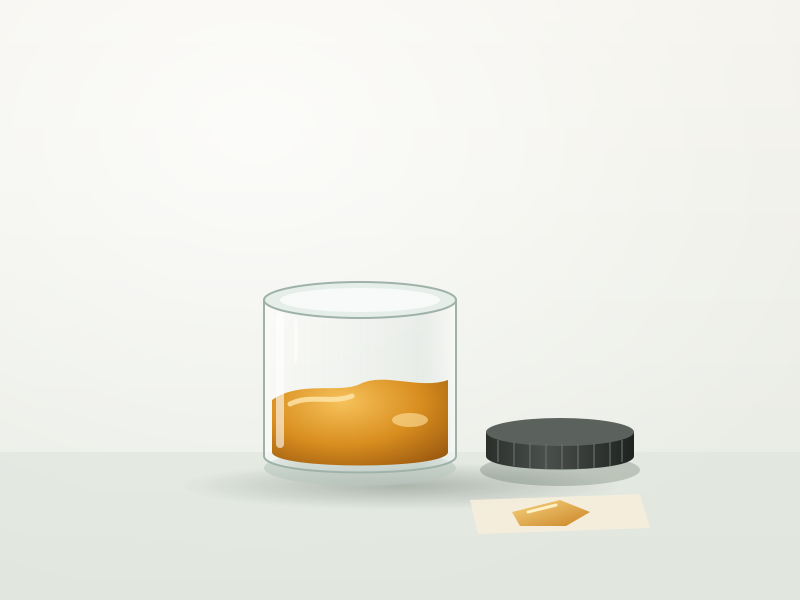
Illustration of a small glass jar of amber concentrate

What it is

Concentrates separate the cannabinoids and terpenes, or the resin glands that hold them, from the rest of the plant. The result usually carries far more cannabinoids by weight than flower does.

Cured resin is extracted with a solvent, usually butane or propane, from plants that were dried and cured first. Live resin is made the same way from fresh frozen plants. Rosin is solventless: flower or hash is pressed with heat and pressure, and live rosin is pressed from hash made from fresh frozen plants. Hash is the collected resin glands themselves, separated with ice water or dry screens. Names like shatter, badder, sugar and sauce describe texture, not a separate method.

Distillate is a highly refined oil with little taste or smell of its own, widely used in vapes and edibles. THCa crystalline is THCa purified into crystals; diamonds are larger crystals usually sold with a terpene-rich sauce. Crude is the unrefined extract, often sold on to another processor for refining.

How distillate gets there

  1. Extracted into crude oil, often with ethanol, hydrocarbon or CO2
  2. Winterized, if needed, to remove fats and waxes
  3. Heated (decarboxylated) so THCa becomes THC
  4. Distilled under vacuum into a clear, refined oil

What buyers look at

  • Type and extraction method, with live versus cured
  • Potency and terpene content on the COA, and residual solvent results for solvent extracts
  • Color, clarity and consistency
  • Price per gram, per kilo or per liter, and the volume available

Vapes

Cartridges, pods and disposables

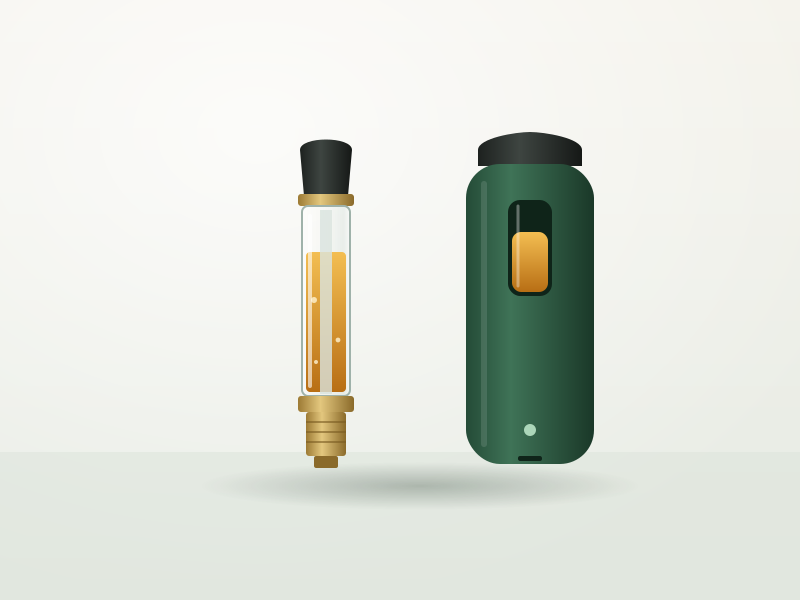
Illustration of a vape cartridge beside a disposable vape

What it is

Cartridges screw onto a separate battery, most often with the common 510 thread. Pods click into a battery made for that brand. Disposables, also called all-in-ones, have the battery built in.

The oil inside is most often distillate blended with terpenes. Others are filled with live resin, rosin or live rosin, or CO2 oil, which usually keep more of the plant's own terpenes. Added terpenes can be cannabis-derived or botanical, meaning taken from other plants.

Some wholesale buyers buy bulk oil and fill their own hardware. Others buy finished, packaged units ready for the shelf.

How it gets there

  1. Oil made or bought in bulk
  2. Terpenes blended in, if used
  3. Hardware filled and capped
  4. Packed

What buyers look at

  • What oil is inside and where its terpenes come from
  • Fill size, such as 0.5 g or 1 g
  • Hardware type, brand and build quality
  • Price per unit and case count

Edibles

Gummies, chocolates, baked goods and beverages

Illustration of gummies and a square of chocolate

What it is

Edibles are foods and drinks made with cannabis, such as gummies, chocolates, baked goods, mints and beverages.

Makers infuse them with many different ingredients: distillate, isolate, resin or live resin, rosin, CO2 oil, full-extract oil such as RSO, or cannabis-infused butter or oil. Drinks usually use a water-soluble emulsion, because cannabis oil does not mix with water. Whatever the ingredient, it is measured into each batch so every serving carries a set amount.

The plant makes mostly THCa, which has to be heated (decarboxylated) to become THC. Distillate is usually activated already; flower, rosin and resin are usually decarboxylated before or during making.

Dosing is stated two ways: milligrams per serving and milligrams per package. Most states set limits on both, so the same product can be packaged differently from one state to the next.

How it gets there

  1. Cannabis ingredient activated if needed, then measured into the batch
  2. Mixed, then cooked, poured or molded
  3. Lab tested for potency per serving
  4. Packed

What buyers look at

  • Milligrams per serving and per package
  • The infusion ingredient, such as distillate, live resin or rosin
  • Shelf life and packaging
  • Price per unit and case count

Extraction methods

How cannabinoids and terpenes are separated from the plant. Solvent methods dissolve them out; solventless methods separate them by water, screens, heat or pressure.

Hydrocarbon (BHO / PHO)
Butane, propane or a blend of the two washes the plant in a closed-loop system, then is purged off and recovered. Used for resin, live resin, shatter, badder, sauce and diamonds.
CO2
Pressurized carbon dioxide does the extracting. Supercritical runs above CO2's critical temperature and pressure and works faster; subcritical runs colder and gentler and tends to keep more terpenes. CO2 oil is common in vapes.
Ethanol
Food-grade alcohol, often chilled, washes the plant and is then evaporated off and recovered. It handles large volumes of biomass and is a common first step toward distillate.
Ice water hash
Solventless. Fresh frozen or dried plants are stirred in ice water so the resin glands break off, then collected through fine mesh bags and dried. Also called bubble hash.
Dry sift
Solventless. Dried plants are sifted over fine screens to collect the resin glands, called kief, which can be sold as is or pressed into hash.
Rosin press
Solventless. Heat and pressure squeeze the oil out of flower, kief or hash. Rosin pressed from ice water hash is called hash rosin.
Live vs cured
Live products start from plants frozen right after harvest, which helps keep more of the plant's original terpenes. Cured products start from plants dried and cured first.
Distillation
A refinement step after extraction, not an extraction itself. Crude oil is cleaned up, heated to convert THCa to THC, and distilled under vacuum into distillate.
Crystallization
Another refinement step. THCa is separated from an extract as crystals, either grown slowly in their own terpenes (diamonds) or purified into THCa crystalline.

Concentrate types

The concentrates traded most often, grouped by how they are made. Names often describe texture as much as method, so the same extract can be sold under more than one name.

Solvent based

A solvent dissolves the cannabinoids and terpenes out of the plant and is then removed. Butane, propane or a blend of the two (hydrocarbon, often called BHO) is the most common solvent for shatter, budder, live resin and diamonds. Distillate and RSO usually start from ethanol or CO2 instead. Licensed processors use closed-loop equipment, and solvent extracts are tested for residual solvents.

Shatter

A hydrocarbon extract that sets into a thin, glassy sheet, usually amber or gold.

How it is made
Plant material is washed with butane or propane, the solvent is purged off under vacuum and gentle heat, and the oil is left undisturbed so it hardens instead of crystallizing.
Consistency
Hard and brittle like glass. Some batches stay softer and stretchy, sold as pull and snap.
Typical potency
Often around 60 to 90 percent total THC, depending on the input and the process.
Flavor
Usually milder than live or terpene-rich extracts, since the stable glassy form tends to hold fewer terpenes.
Relative price
Lower

Crumble, wax and budder

Also called badder, batter, sugar

Hydrocarbon extracts that set opaque and soft instead of glassy. The names describe texture rather than a separate method. Sugar is a close relative with a grainy, wet look.

How it is made
Made like shatter, but the oil is stirred, whipped or purged at different temperatures and times so it crystallizes into a soft solid. Some are made from fresh frozen plants and sold as live budder or live sugar.
Consistency
Crumble is dry and breaks apart. Wax is soft and a little sticky. Budder is smooth and creamy, like soft butter.
Typical potency
Often around 60 to 90 percent total THC.
Flavor
Often more aromatic than shatter, budder especially, though it depends on the input and how it was purged.
Relative price
Lower to middle

Live resin

A hydrocarbon extract made from fresh frozen plants instead of dried and cured ones, valued for keeping more of the fresh plant's aroma.

How it is made
Plants are frozen right after harvest and extracted with butane or propane while still frozen, then purged. The extract can be finished as sauce, sugar or budder.
Consistency
Varies with the finish: often wet and sugary or saucy, sometimes a creamy budder.
Typical potency
Often around 60 to 90 percent total THC. Buyers usually care as much about the terpene content.
Flavor
Strong and true to the fresh plant, usually higher in terpenes than resin made from cured material.
Relative price
Higher

Diamonds and sauce

Two parts of one extract. Diamonds are crystals of THCa; sauce is the terpene-rich liquid they form in. They are usually sold together.

How it is made
A hydrocarbon extract, most often from fresh frozen plants, rests in a sealed container, sometimes with gentle heat and pressure. Over days to weeks the THCa crystallizes out and the terpenes separate into the sauce.
Consistency
Hard, clear to white crystals sitting in a runny, syrupy liquid. Usually kept cool.
Typical potency
Diamonds typically test above 90 percent THCa. Sauce is lower in cannabinoids and high in terpenes, so a mixed jar lands in between.
Flavor
Comes almost entirely from the sauce, which is often very aromatic. Diamonds alone taste of very little.
Relative price
Higher

Distillate

A highly refined oil distilled down to mostly one cannabinoid, usually THC. Widely used in vapes and edibles.

How it is made
Usually starts as a crude extract made with ethanol, CO2 or hydrocarbon. The crude is winterized to remove fats and waxes, heated so THCa becomes THC, then distilled under vacuum, often more than once.
Consistency
Thick, clear oil, pale gold to amber, about as viscous as honey.
Typical potency
Typically above 85 percent THC, often 90 percent or more.
Flavor
Very little of its own, since distillation removes most terpenes. Many products add terpenes back in.
Relative price
Lower to middle, priced mostly on purity and volume

RSO (Rick Simpson Oil)

Also called full extract cannabis oil

A full extract oil named after Rick Simpson, who popularized it. It keeps much of the plant's chemistry, chlorophyll included, and is not refined like distillate.

How it is made
Traditionally made by soaking plant material in a solvent, usually food-grade ethanol, then straining it and evaporating the solvent off with gentle heat. It is not usually made with butane.
Consistency
Thick, dark, tar-like oil, often sold in syringes.
Typical potency
Varies widely with the input and process; commonly around 50 to 70 percent total cannabinoids, sometimes more.
Flavor
Earthy and bitter, with a strong plant taste. It is not made for flavor.
Relative price
Lower

Solventless

No chemical solvent. The resin glands (trichomes) are separated from the plant with cold, water, screens, heat or pressure. Solventless products usually cost more because they yield less, take more skilled labor, and the best grades need very good starting material.

Kief

Also called keef, dry sieve

The loose resin glands (trichomes) that fall away from dried cannabis. The simplest concentrate.

How it is made
Dried plants or trim are shaken or tumbled over a screen, and the trichomes that sift through are collected.
Consistency
Fine, dry, sandy powder, light tan to green. It can be pressed into hash.
Typical potency
Varies widely with how clean it is; often around 20 to 60 percent total THC.
Flavor
Mild to moderate, carrying some of the plant's aroma.
Relative price
Lower

Dry sift

A cleaner, more refined kief: the same trichomes, sieved through finer and finer screens to separate the heads from plant matter.

How it is made
Dried, often chilled material is sifted over a series of screens with smaller and smaller openings. The finest, cleanest grades are collected separately, and the best can be pressed into rosin.
Consistency
Fine, light-colored powder. The higher the grade, the paler and less green it looks.
Typical potency
Typically around 30 to 70 percent total THC, with the top grades at the high end.
Flavor
Cleaner and more aromatic than ordinary kief at the higher grades.
Relative price
Middle to higher, by grade

Bubble hash

Also called ice water hash

Trichome heads separated with ice water and filtered through mesh bags. It is graded by how completely it melts: full melt is the top grade, and lower grades are often called food grade.

How it is made
Fresh frozen or dried plants are stirred in ice water so the brittle trichomes break off, then the water is filtered through a stack of mesh bags that each catch a different size. The hash is then dried, often by freeze drying.
Consistency
From sandy and crumbly to a soft, doughy paste. The best grades look light and grainy.
Typical potency
Typically around 40 to 70 percent total THC, with full melt grades often higher.
Flavor
Rich and true to the plant, especially when made from fresh frozen material.
Relative price
Middle to highest, by grade

Rosin

A solventless oil pressed out of flower, kief or hash with heat and pressure.

How it is made
The material is packed into a fine filter bag and squeezed between heated plates in a rosin press. The oil runs out and the plant matter stays in the bag. Some rosin then rests in a cool place for days or weeks (a cold cure) to change its texture.
Consistency
From a clear, glassy sap to a creamy, whipped badder or a jam, depending on how it is finished.
Typical potency
Typically around 50 to 80 percent total THC; hash rosin usually runs higher than flower rosin.
Flavor
Full and natural, since no solvent touches it. Hash rosin from fresh frozen material is often the most aromatic.
Relative price
Higher to highest

Kinds of rosin

Flower rosin
Pressed straight from dried flower. The simplest rosin; it yields more but is usually less refined than hash rosin.
Hash rosin
Pressed from ice water hash, or sometimes dry sift, instead of flower. Cleaner, and usually higher in potency and price.
Live rosin
Hash rosin made from fresh frozen plants: frozen at harvest, washed into hash, dried, then pressed. Often the highest priced concentrate on a menu.
Cured rosin
Rosin made from plants that were dried and cured first, instead of fresh frozen. Usually priced a step below live rosin.

Isolate

A single cannabinoid purified on its own, as crystals or a powder.

Isolate

Also called THCa crystalline

One cannabinoid purified on its own. In cannabis wholesale it is usually THCa, sold as THCa crystalline. CBD isolate is the hemp equivalent.

How it is made
An extract, typically made with hydrocarbon or another solvent, is refined and the cannabinoid is crystallized out of it, then the crystals are washed and dried.
Consistency
White to off-white crystals or a fine crystalline powder.
Typical potency
Typically 95 percent or more of the one cannabinoid, often higher.
Flavor
Almost none, since it holds almost no terpenes.
Relative price
Middle, priced mostly on purity and volume

Potency figures are typical ranges seen in the trade, not guarantees. The batch's COA is the number that counts.

Price tiers compare concentrates with each other at wholesale. Real prices move with quality, input material, volume and the market.

General information only. Rules differ by state; follow your license and local regulations.

Lab testing and COAs

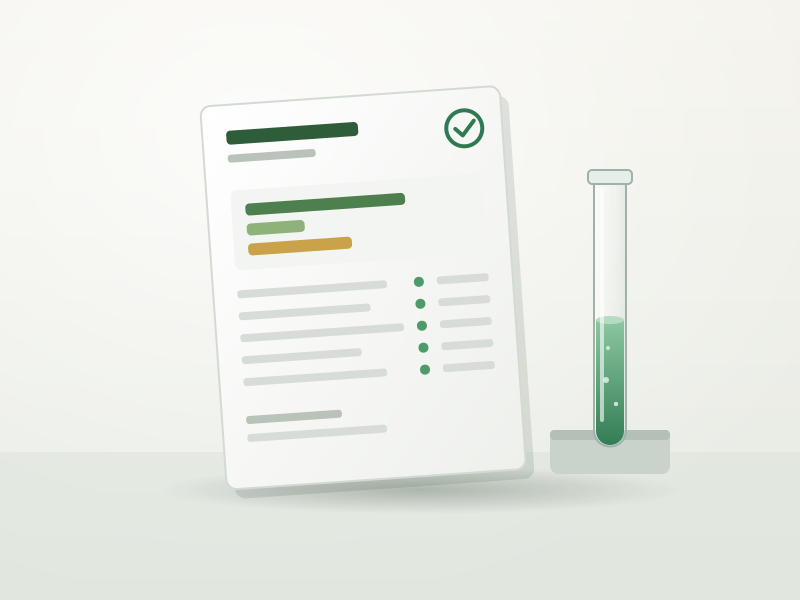
Illustration of a lab report page with a test tube

In regulated markets, a sample from each batch is tested by a licensed lab before the product can be sold, and the lab issues a Certificate of Analysis, or COA. It is the batch's report card. Which tests are required, and the limits each one has to meet, differ by state.

What a COA generally shows

Batch details
The product, the batch or lot number, the lab, the sample and test dates, and a pass or fail for each test.
Potency
How much THC, THCa, CBD, CBDa and other cannabinoids it contains. Total THC is usually calculated as THC plus 0.877 times THCa, because THCa loses some weight when it converts to THC.
Terpenes
Which aromatic compounds are present and how much, such as myrcene, limonene and caryophyllene. Not every state requires this test.
Pesticides
Screens for pesticide residues against the state's list and limits.
Heavy metals
Such as lead, arsenic, cadmium and mercury.
Microbials and mycotoxins
Mold, yeast and bacteria such as E. coli and Salmonella, and toxins some molds produce, such as aflatoxins.
Residual solvents
For extracts, any solvent left behind, such as butane, propane or ethanol.
Moisture and water activity
For flower, how much water it holds and how much of that water is available for mold to grow.
Foreign matter
Hair, insects, dirt and anything else that does not belong in the product.

Why buyers ask for it

Buyers ask for the COA because it is an independent check on what they are buying. It supports the price, it shows the batch passed, and retailers generally expect one before a product goes on the shelf. A good habit is to check that the batch or lot number on the COA matches the product being offered.

Glossary

Cultivar / strain
A named variety of cannabis. Cultivar is the botanical term; strain is the everyday one. Names are not standardized, so the same name from two growers can be different genetics.
Indica / Sativa / Hybrid
Traditional labels based on how the plant grows: indica for shorter, bushier plants and sativa for taller, narrower ones. After decades of crossbreeding most cultivars are hybrids, and the labels are not a reliable guide to a product's chemistry or effects.
Terpenes
Aromatic compounds made by cannabis and many other plants. They shape a cultivar's smell and flavor.
THC and THCa
The growing plant makes mostly THCa, not THC. Heat converts THCa into THC, and a little converts slowly over time. A COA reports both, usually with a Total THC figure that combines them.
Decarboxylation
The chemical change heat causes in cannabinoid acids, turning THCa into THC and CBDa into CBD. It happens when flower is smoked or vaped, and is done on purpose when making distillate and most edibles.
COA
Certificate of Analysis: the lab report for a batch, covering potency and the contaminant screens the state requires, and often terpenes.
Biomass
Plant material sold to be extracted rather than sold as flower, such as trim, shake, lower-grade buds or whole plants, either dried or fresh frozen.
Fresh frozen
Whole plants or buds frozen right after harvest, skipping drying and curing, to keep more terpenes for live products such as live resin and live rosin.
Dry and cure
Drying slowly removes most of the water after harvest, usually over about one to two weeks. Curing follows: the dried flower rests in sealed containers, with humidity watched, so moisture evens out and aroma is kept.
Wholesale
Selling in bulk between licensed businesses, before a product reaches a retail shelf.
Case / unit
A unit is one sellable item, like one cartridge. A case is a set number of units packed together.
Greendex

Ready to see what is trading?

Browse live wholesale lots on the Exchange, or tell sellers what you are looking for.

General information only. Rules differ by state; follow your license and local regulations.